
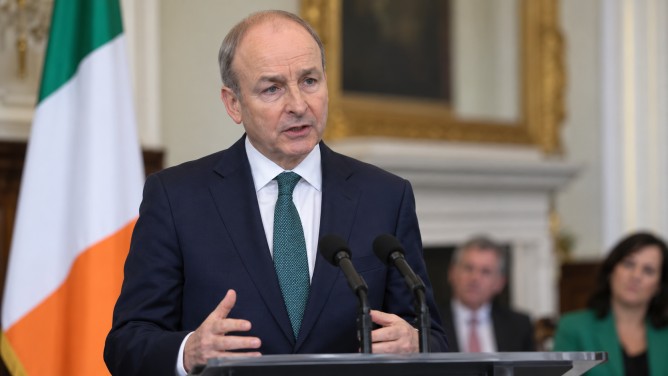
Irish Taoiseach Micheál Martin remains optimistic that European Union leaders will reach a consensus on the next seven-year budget despite ongoing disputes over spending priorities and allocations. Speaking during Ireland’s EU presidency, Martin emphasized the importance of agreeing on the budget before December to allow for its implementation by January 1, 2028.
The Irish government has proposed a draft negotiating framework built on the European Commission’s initial €1.72 trillion plan. However, the draft has faced criticism from several member states that advocate for more substantial spending cuts. Meanwhile, the European Commission has raised concerns that the proposal could limit essential financial flexibility and undermine key safeguards.
Martin acknowledged the challenges involved in reconciling diverse demands from member states. Some nations are pushing for a smaller budget, whereas others are determined to maintain funding for initiatives like regional development and the Common Agricultural Policy. The Irish proposal, according to Martin, aims to propel the negotiations forward rather than meet all member states’ demands.
European Council President António Costa and national EU leaders will be involved in the ongoing negotiations. Ireland has committed to acting as a neutral and constructive chair during its presidency. The timely approval of the budget is seen as vital for its scheduled enactment at the start of 2028.
In addition to budget discussions, EU leaders will tackle several other pressing issues, including rising trade tensions with China, high energy prices, migration, and the economic ramifications of conflicts involving the United States, Israel, and Iran. The EU is particularly focused on addressing its trade deficit with China, which stood at €360 billion in 2025, and is considering measures to limit imports of Chinese hybrid cars and other goods.
Energy costs are another critical topic, as global oil and gas market constraints threaten to raise household electricity bills during the winter months. EU leaders are expected to explore further short-term measures alongside existing proposals to manage energy and emissions.
Support for Ukraine remains a priority, with discussions expected on continued political, financial, and military aid as Russian aggression continues. Ukrainian President Volodymyr Zelenskyy is set to meet with European leaders to seek further backing for Kyiv amid uncertainty about US assistance.