
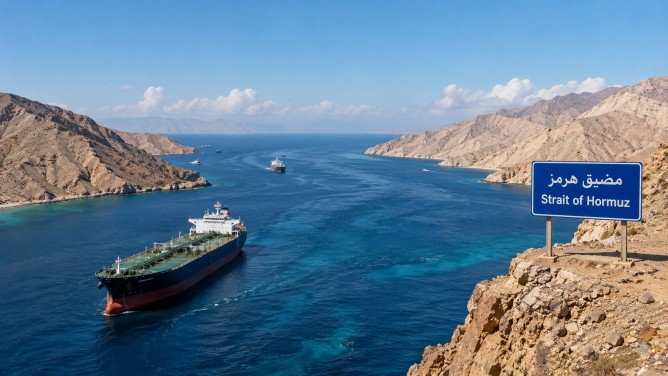
On Thursday, a significant drop in shipping activity was observed in the Strait of Hormuz, a vital corridor for global energy trade, as escalating tensions between the United States and Iran caused disruptions. Only three commodity vessels traversed this crucial maritime passage, marking the lowest daily traffic since May. The decrease in activity is attributed to security concerns, as many ships either postponed their voyages or reversed course following recent attacks on commercial vessels and increased military hostilities in the region.
This disruption in the Strait of Hormuz, which plays a pivotal role in the export of oil and liquefied natural gas worldwide, has sparked worries about global energy supply stability. The slowdown in traffic has also contributed to a rise in global oil prices. Of the ships that successfully navigated the strait, several halted in the Gulf of Oman, while a fuel tanker turned back to the Persian Gulf after briefly exiting the waterway.
The decline in vessel movement follows an already sluggish day on Wednesday, when only 11 ships passed through the strait, significantly below the usual daily average of approximately 125 vessels. Notably, large crude oil tankers and liquefied natural gas carriers were absent for the second day in a row. Despite the overall reduction in traffic, two very large crude carriers, each transporting around two million barrels of oil, later emerged from the strait and resumed their journeys to destinations in Asia and Europe.
In addition to these challenges, Iraq temporarily halted oil loading operations at its Basra export terminal after a drone strike targeted an oil tanker, though operations resumed shortly thereafter. Meanwhile, Iran has issued warnings that oil and gas exports through the Strait of Hormuz could face continued disruptions if military tensions persist, heightening fears of further instability in the global energy markets.