
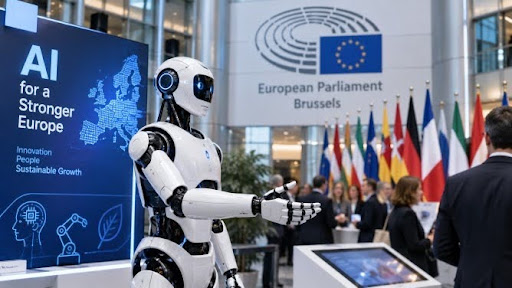
In Brussels, a robotics showcase unveiled the impressive capabilities of AI-powered humanoid robots, demonstrating their potential to revolutionize various sectors. Highlighting significant strides in artificial intelligence and robotics, these robots performed a range of tasks, from household chores to carrying objects, and exhibited diverse methods of movement at the European Parliament event.
This showcase comes at a crucial time for Europe, where an ageing population and a diminishing workforce are prompting increased interest in technologies that could alleviate labor shortages and support workers. The potential for humanoid robots to undertake tasks in factories without necessitating substantial changes to current infrastructure is particularly enticing. Nonetheless, while promising, this technology remains largely experimental, with further development needed before it becomes widely available for commercial use.
Advancements in AI are significantly enhancing robots’ abilities to comprehend their surroundings, manipulate objects, and adjust to dynamic environments. These improvements could enable robots to collaborate more effectively with humans in various settings, including homes, factories, and other workplaces. Developers are optimistic that such capabilities will pave the way for robots to integrate seamlessly into the workforce, providing much-needed support and efficiency.
As Europe grapples with demographic challenges, the potential for robots to fill gaps in the labor market is becoming increasingly appealing. While the technology is still in its formative stages, the progress showcased in Brussels indicates a future where humanoid robots could play a pivotal role in addressing workforce shortages and enhancing productivity across multiple industries.